What Is a Circle? Understanding Women's Circles, Community Circles, and Sharing Circles
Circles are among the oldest forms of human gathering. Long before boardrooms and lecture halls, people sat in circles – around fires, in meadows, inside sacred structures – to share stories, make decisions, and hold space for one another. Today, circles are experiencing a quiet revival in wellness and spiritual communities, and for good reason.
If you've seen events listed as "women's circles," "sharing circles," or "community circles" and wondered what they actually involve, this guide is for you.
What Is a Circle?
A circle is an intentional gathering where participants sit together – usually literally in a circle – to share, listen, and be present with one another. Unlike a workshop or class, there's typically no teacher at the front of the room. Everyone is on equal footing. The circle itself is the container.
What makes a circle different from just sitting in a round arrangement is the intention behind it. Circles are held with purpose: to create a safe space for authentic expression, deep listening, and connection. There are usually simple agreements – like confidentiality, speaking from the heart, and listening without judgment – that help everyone feel safe.
Types of Circles
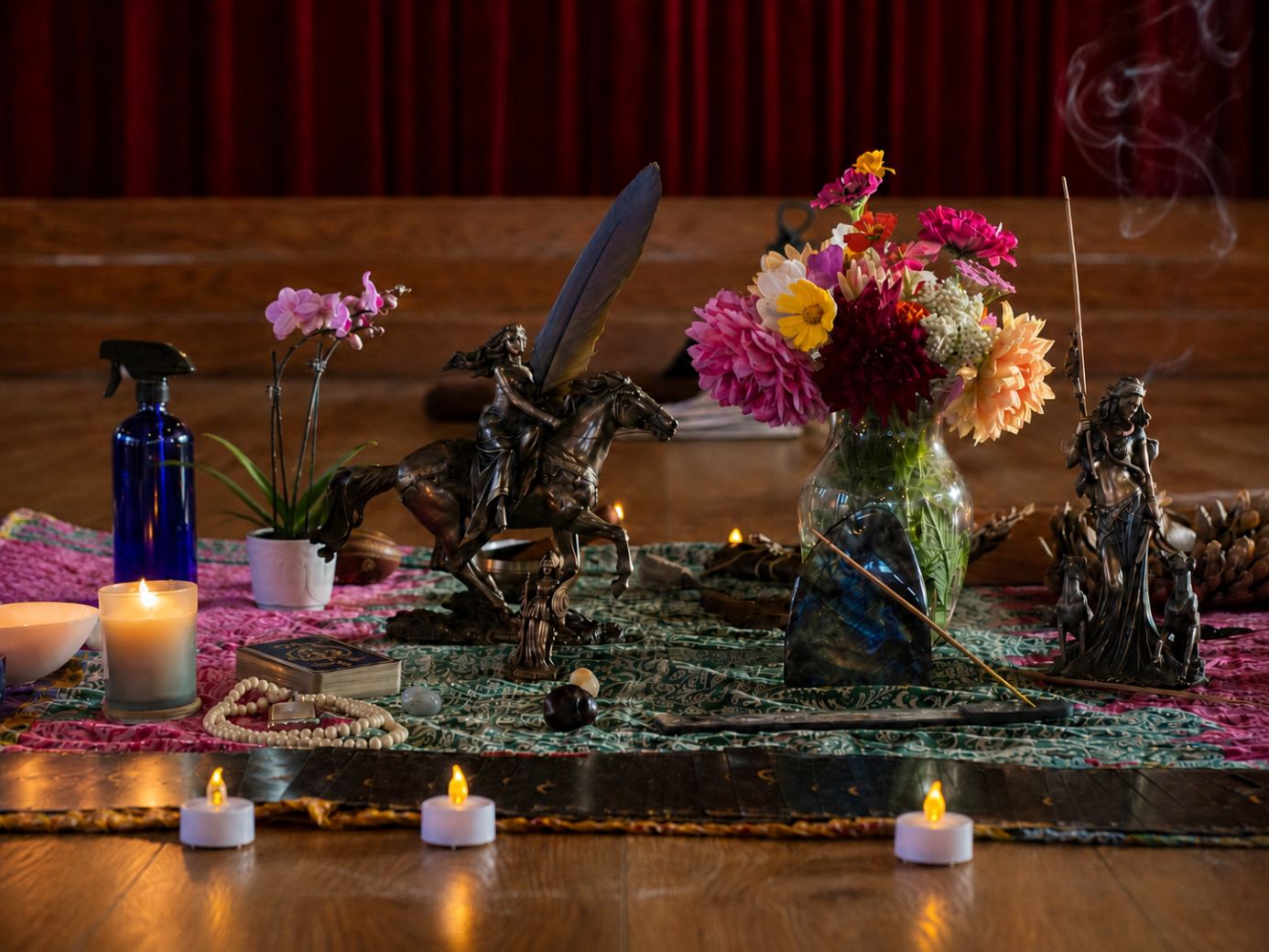
Women's circles are gatherings exclusively for women-identifying individuals. They often focus on themes like sisterhood, cycles, creativity, grief, joy, or seasonal transitions. Many women's circles incorporate ritual elements like candle lighting, intention setting, or sharing objects.
Men's circles provide similar space for men-identifying individuals to explore vulnerability, purpose, and authentic connection in a culture that often discourages emotional openness.
Mixed or community circles are open to all genders and often center around a shared theme – gratitude, grief, transition, creativity, or simply the practice of being together with intention.
[Moon circles](/journal/moon-circles-guide) align with lunar phases, typically gathering at the new moon (for intention setting) or full moon (for release and celebration).
What Happens in a Circle?
While every circle is unique, most follow a similar rhythm:
Opening: The facilitator creates a transition from ordinary life into sacred space. This might be a collective breath, a moment of silence, lighting a candle, or a brief grounding meditation. The opening signals: we are here now, together, with intention.
Sharing rounds: The heart of most circles. A talking piece – a stone, a feather, a candle – is passed around. Whoever holds it speaks; everyone else listens. You share what's alive for you – what you're carrying, celebrating, releasing, or wondering about. There's no cross-talk, no advice-giving, no fixing. Just witnessing.
Central practice: Some circles include a guided meditation, a breathwork exercise, journaling prompts, movement, or a creative activity. This varies widely depending on the circle's focus.
Closing: The facilitator brings the circle to a close with a moment of gratitude, a collective breath, or a simple ritual. This marks the return to everyday life while honoring what was shared.
Why Sitting in Circle Matters
There's something profound about the circular shape itself. There's no head of the table. No one is more important than anyone else. Everyone can see everyone. This simple arrangement creates a felt sense of equality and belonging that's rare in modern life.
In a circle, you practice something increasingly rare: being heard without being evaluated, and hearing others without needing to respond. It's a practice of presence that can feel startling at first – and deeply nourishing once you settle into it.
What Makes It Different from a Workshop or Class?
In a workshop, there's typically a teacher transmitting knowledge. In a class, there's a skill being developed. In a circle, the wisdom comes from within and between the participants. The facilitator holds the container, but they don't position themselves as the expert. Everyone's experience is equally valid.
This can feel unfamiliar if you're used to structured learning environments. There's no curriculum, no right answers, no assessment. The "outcome" is simply having been present with yourself and others in a meaningful way.
Your First Circle: What to Expect
Arrive open. You don't need to have anything prepared to say. You don't need to perform vulnerability or share anything you're not ready to share. "I'm just here to listen" is always a valid contribution.
Respect the agreements. Most circles establish agreements at the start – confidentiality, no advice-giving, speaking from "I" statements. These exist to keep the space safe for everyone.
It's okay to pass. When the talking piece comes to you, you can always pass. No one will judge you. Sometimes the bravest thing is simply being present without speaking.
Emotions may surface. The combination of stillness, witnessing, and being witnessed can unlock feelings you didn't know you were carrying. This is normal and welcome. Circles are spaces where tears, laughter, silence, and everything in between are honored.
You don't need to "believe" anything. Circles aren't affiliated with any particular religion or belief system. You can participate fully regardless of your spiritual background – or lack thereof.
If you're curious about experiencing a circle, explore the events on Estara to find gatherings near you. From intimate sharing circles to expansive community gatherings, there's a circle waiting for you.