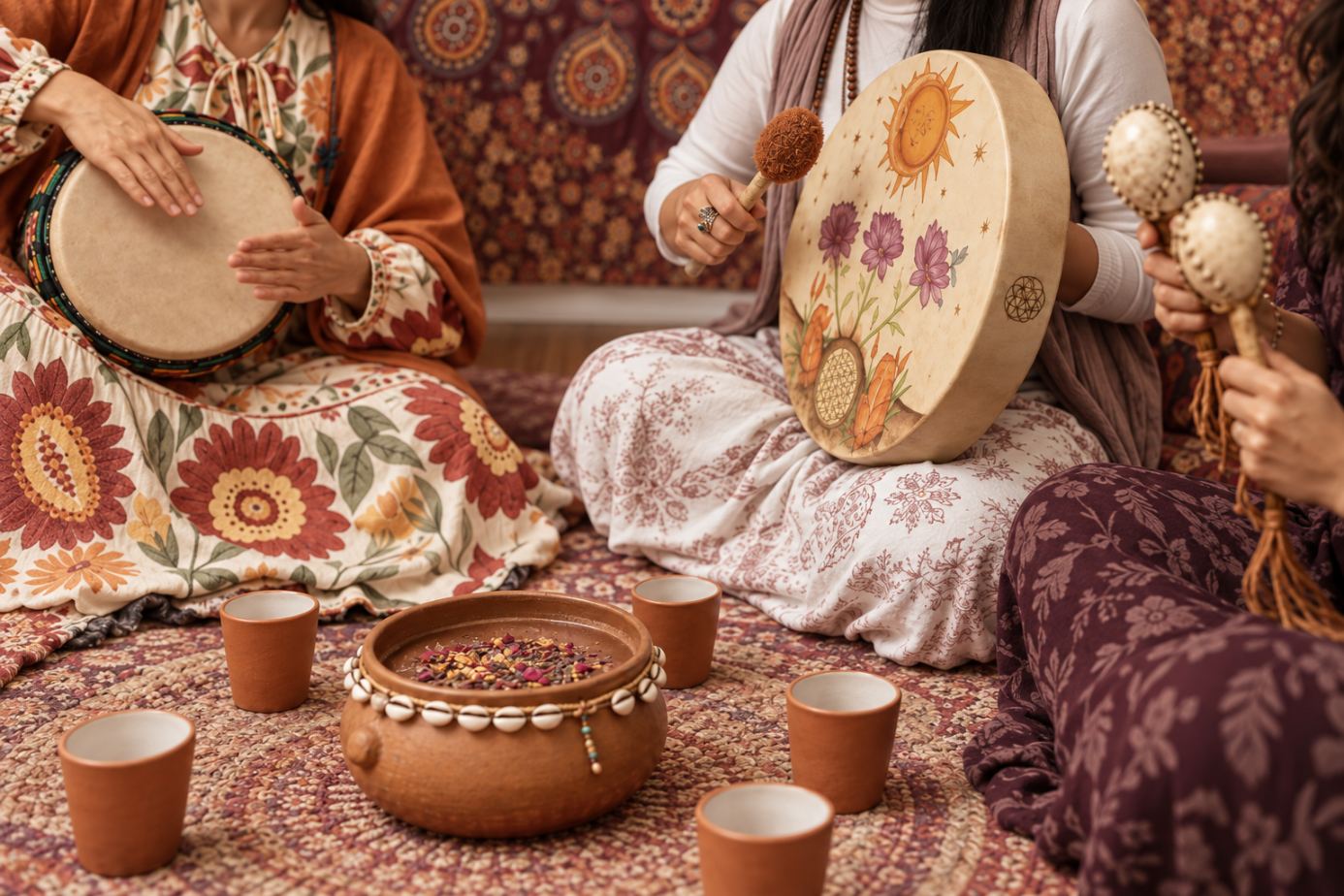
Voice as Medicine: Toning, Chanting, and Vocal Resonance
Most of us think of our voice as a communication tool – something we use to speak, express ideas, or occasionally sing in the shower. But across cultures and throughout history, the human voice has been recognized as something far more powerful: a healing instrument.
From Gregorian chants to Hindu mantras, from Indigenous songlines to contemporary sound healing, the practice of using voice intentionally – to shift internal states, release tension, and connect with something larger – is one of humanity's oldest medicines.
And the beautiful thing? You already have everything you need. You don't need to carry a tune.
What Is Vocal Healing?
Vocal healing encompasses any practice that uses the human voice intentionally for wellbeing, regulation, or spiritual connection. This includes:
Toning – sustaining a single vowel sound (like "ahh" or "ohm") for extended periods. Toning is perhaps the most accessible entry point because there's no melody to learn, no words to remember. You simply make a sound and feel its vibration in your body.
Chanting – repeating words, phrases, or mantras rhythmically. Chanting can be done solo or in groups. In the yogic tradition, mantras like "Om Namah Shivaya" or "Sat Nam" are chanted for their vibrational qualities as much as their meaning.
Kirtan – a call-and-response style of devotional chanting rooted in the Bhakti yoga tradition. A leader sings a phrase, and the group echoes it back. Kirtan is musical but requires zero musical training – the repetition makes it easy to join in.
Vocal resonance work – using specific sounds, pitches, or vibrations to target areas of the body or energy system. Some practitioners work with the idea that different tones correspond to different energy centers (chakras) in the body.
How Sound and Vibration Affect the Body
Sound is vibration, and your body is approximately 60% water – an excellent conductor of vibration. When you make a sustained sound, you can literally feel it resonating through your chest, throat, skull, and abdomen.
Research on vocal practices has shown measurable effects: reduced cortisol levels, lowered heart rate, increased vagal tone (a marker of nervous system health), and enhanced mood. Group chanting, in particular, has been shown to synchronize heart rates among participants – a phenomenon researchers call "interpersonal synchrony."
But you don't need studies to experience this. Try it right now: take a deep breath and let out a long, low "ahhh" sound. Notice what happens in your body. Most people report feeling a subtle release – a softening in the chest, a quieting of mental chatter, a sense of settling.
Now imagine sustaining that for twenty minutes, in a room full of people doing the same thing. The effect is profound.
"But I Can't Sing"
This is the most common concern people have about voice practices – and it's also the least relevant. Vocal healing has nothing to do with singing ability. Toning, chanting, and resonance work aren't about pitch accuracy or vocal quality. They're about vibration, intention, and presence.
In a voice circle or toning session, no one is performing. There's no audience. Often, everyone's eyes are closed. The sounds blend together into a collective wash of vibration where individual voices become indistinguishable. You can't do it wrong.
If the idea of making sound in front of others still feels intimidating, know that you're not alone – and that this particular vulnerability is part of what makes the practice so powerful. Using your voice openly, without concern for how it sounds, is an act of self-acceptance. Many people find it profoundly liberating.
What to Expect at a Voice Circle or Toning Session
The space will likely be simple – chairs or cushions arranged in a circle, perhaps some candles. The facilitator will guide the group, often starting with gentle warm-ups: humming, sighing, or breathing exercises.
You'll be invited, not required. Good facilitators make it clear that participation is always optional. You can hum quietly, you can listen, you can close your eyes and let the sound wash over you.
Expect some guidance on sound. The facilitator might introduce specific vowel sounds, mantras, or tones. They'll often explain why a particular sound is being used and what you might notice in your body.
Emotions may arise. The throat is associated with expression – and many of us carry tension there from years of unexpressed feelings. Making sound can release emotion. Tears, laughter, trembling – all are welcome and normal.
The group sound is remarkable. One of the most common reactions people have after their first group toning experience is awe at how beautiful the collective sound becomes. Individual "imperfect" voices weave together into something that feels almost otherworldly.
Afterward, expect stillness. Most voice sessions end with a period of silence that feels deeply spacious. Many people describe a sense of peace, clarity, or emotional lightness.
Getting Started
If singing in the shower feels good, you're already practicing vocal medicine. To deepen the practice, try this at home: sit comfortably, close your eyes, take three deep breaths, and begin humming. Stay with it for five minutes. Notice the vibration in your lips, your sinuses, your chest. Notice how your mind settles.
When you're ready for the communal experience, explore sound healing events and voice circles on Estara. The experience of making sound together – of lending your voice to a collective vibration – is something that words can't quite capture. It has to be felt.