Medicine Drum Making Ceremony: What It Is, What It Means, and What to Expect
A drum can seem simple from the outside. It is hide, frame, cord, sound. But for many people, the process of making one is not just practical. It can feel reflective, emotional, and quietly ceremonial.
That is part of what draws people to a medicine drum making ceremony. It offers a way to step out of ordinary pace for a few hours and enter a more intentional rhythm, where making something by hand also becomes a way of paying attention.
If that sounds a little abstract, you are not alone. Many first-timers are interested in the experience without fully knowing what it involves. The good news is that a well-held drum making ceremony is usually less about already understanding the symbolism and more about arriving with care, curiosity, and enough openness to let the process teach you something.
What Is a Medicine Drum Making Ceremony?
A medicine drum making ceremony is a guided gathering where participants create a hand drum, often in a space that treats the process as meaningful rather than purely instructional.
The word medicine here does not usually refer to medical treatment. In many wellness and ritual spaces, it points instead to something restorative, clarifying, connective, or personally significant. A medicine drum is often understood as an instrument made with intention, one that may support prayer, song, meditation, grief work, ceremony, or personal practice.
In many settings, the experience includes both hands-on construction and ritual elements. Depending on the facilitator and tradition, that might include prayer, silence, introductions, song, gratitude for the materials, reflection on intention, or time to honor the animal and wood used to make the drum.
Some ceremonies are rooted in specific Indigenous traditions. Others are modern spiritual or community-based offerings inspired by ritual craft. That difference matters. A thoughtful facilitator should be clear about the lineage, framing, and cultural context of the experience rather than borrowing vaguely sacred language without explanation.
How Does It Work?
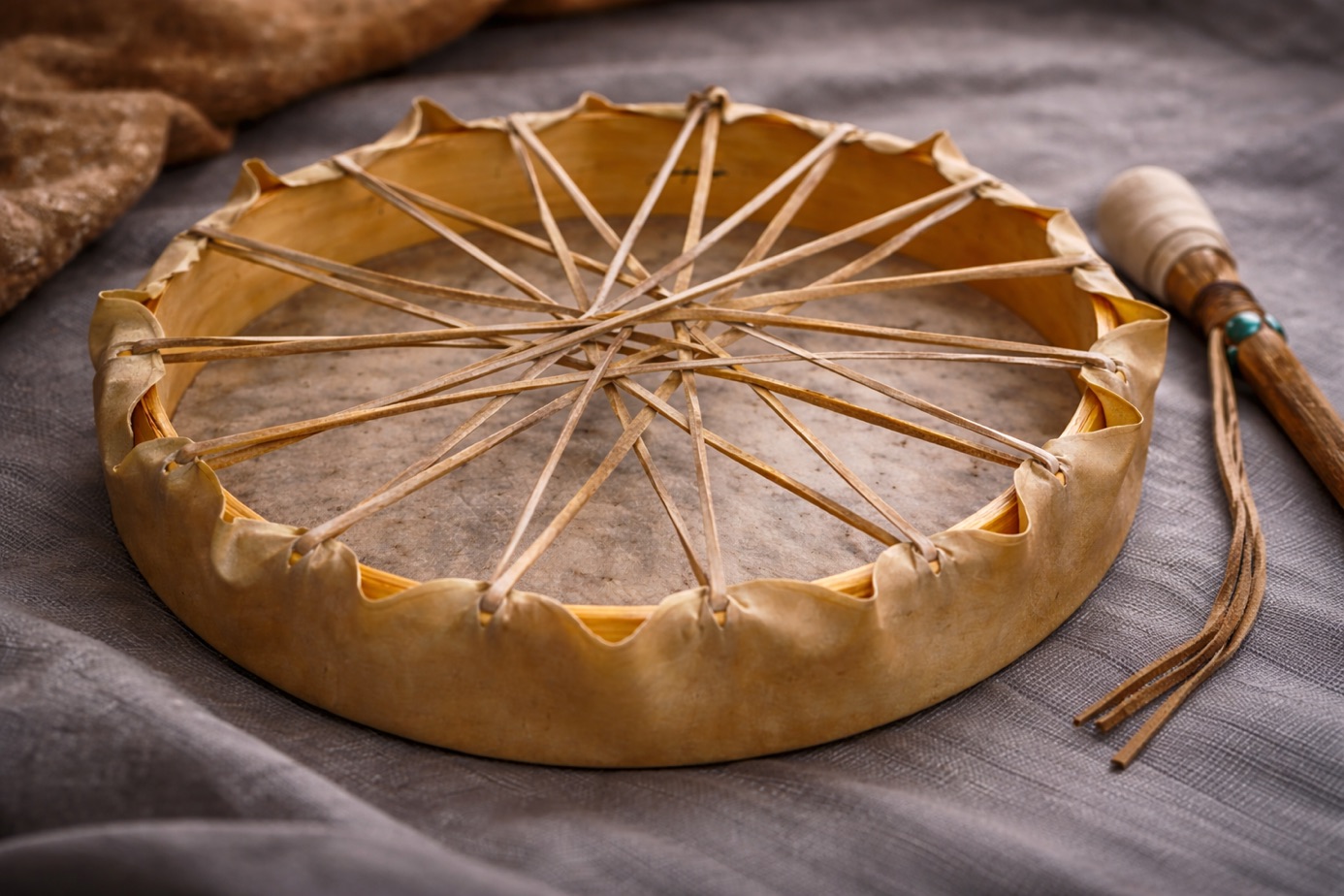
The practical side of a drum making ceremony usually involves choosing materials and assembling the drum by hand. Participants often work with a wooden frame, rawhide, and lacing that is pulled and woven into place while the drum is still wet.
As the hide dries, it tightens over the frame and creates the drum's surface. Some gatherings also include making a beater or mallet to accompany the drum.
In simple terms: you are making an instrument, but you are also being asked to slow down enough to notice what the process brings up. For some people that feels grounding. For others it feels emotional, awkward, beautiful, or all three.
That range is normal.
Why It Can Feel So Meaningful
There is something powerful about making an object you will actually use, especially when the process asks for patience and presence.
A medicine drum making ceremony can feel meaningful for a few reasons. First, it is tactile. You are working with your hands, pulling lacing, feeling tension, noticing texture, adjusting pressure. That alone can bring people into their bodies in a different way than many everyday activities do.
Second, it often carries symbolic weight. Sound is deeply felt. Rhythm can be steadying. A drum can come to represent voice, pulse, grief, prayer, remembrance, or creative expression, depending on the person.
Third, there is the simple fact of making something slowly, in company, with intention. In a culture that often pushes speed and polish, that can feel surprisingly rare.
Not everyone will experience the ceremony in an overtly spiritual way. Some people leave feeling deeply moved. Others mostly feel proud, calm, or quietly satisfied. Neither response is more correct.
What to Expect
Most medicine drum making ceremonies take several hours, and some last most of a day. The pace is often unhurried, because the work itself cannot really be rushed.
You can usually expect:
- A guided introduction to the materials and construction process
- Some framing around intention, meaning, or ceremonial context
- Hands-on drum assembly with facilitator support
- Shared time in a small group setting
- A closing moment, blessing, song, or reflection
You may also notice a mix of moods in the room. Some participants become very focused and quiet. Some are chatty at first and then settle in. Some feel unexpectedly emotional once the making begins.
That does not mean something dramatic has to happen. It simply means that repetitive handwork, sound, symbolism, and group ritual can open up a different pace of attention than people are used to.
From a practical standpoint, wear comfortable clothing and expect to use your hands. Depending on the workshop, materials may have a strong natural smell, and the process can be physically a little messy or awkward at moments. Your drum may also need time to dry fully before its final tone emerges.
Who Is It For?
A medicine drum making ceremony can be a good fit for people who are drawn to ritual, sound, handcraft, or intentional group experiences. It can also appeal to people who want something more participatory than simply attending a class or circle.
You do not need to be musical. You do not need to consider yourself especially spiritual. And you do not need to already know what the drum will mean to you.
It may be especially supportive for:
- Beginners curious about ceremonial spaces
- People who connect through making things by hand
- Those interested in rhythm, sound healing, or personal ritual
- Anyone looking for a slower, more intentional kind of gathering
It may be less ideal if you are looking for a fast, casual craft workshop with minimal symbolism. It can also feel complicated if the offering is not clear about its cultural grounding. If a ceremony uses sacred language, references lineage, or draws from Indigenous practices, it is reasonable to ask respectful questions about how the facilitator relates to that tradition.
That kind of clarity builds trust.
Getting Started
If you are considering your first medicine drum making ceremony, it helps to look for an offering that feels grounded and well held.
A few good questions to ask are:
- How is the ceremony framed?
- What materials are used?
- Is the experience rooted in a specific tradition or lineage?
- What is the group size?
- How long does it last?
- What should participants bring or prepare for?
You can also pay attention to tone. The strongest offerings usually do not overpromise transformation. They make space for reverence without pressure, and they explain the experience clearly enough that a newcomer can arrive without feeling out of place.
A medicine drum making ceremony does not have to be dramatic to be meaningful. Sometimes the deepest part is simply this: you sit down, use your hands, listen for the sound that emerges, and leave with something you made in a more attentive state than usual.
If you are curious, that is enough to begin. Estara is a good place to explore spaces and events that make these kinds of experiences feel more approachable, especially if you are looking for an entry point that feels thoughtful rather than performative.